



Dubai, UAE — The Free Zones Authority of Ajman (FZA) has issued an important notice to all registered establishments operating under its jurisdiction, reinforcing compliance with the UAE's updated Wage Protection System (WPS). The announcement ties directly to Ministerial Resolution No. (0340) of 2026, a federal regulation aimed at strengthening labour relations and ensuring timely, transparent wage payments across the country.
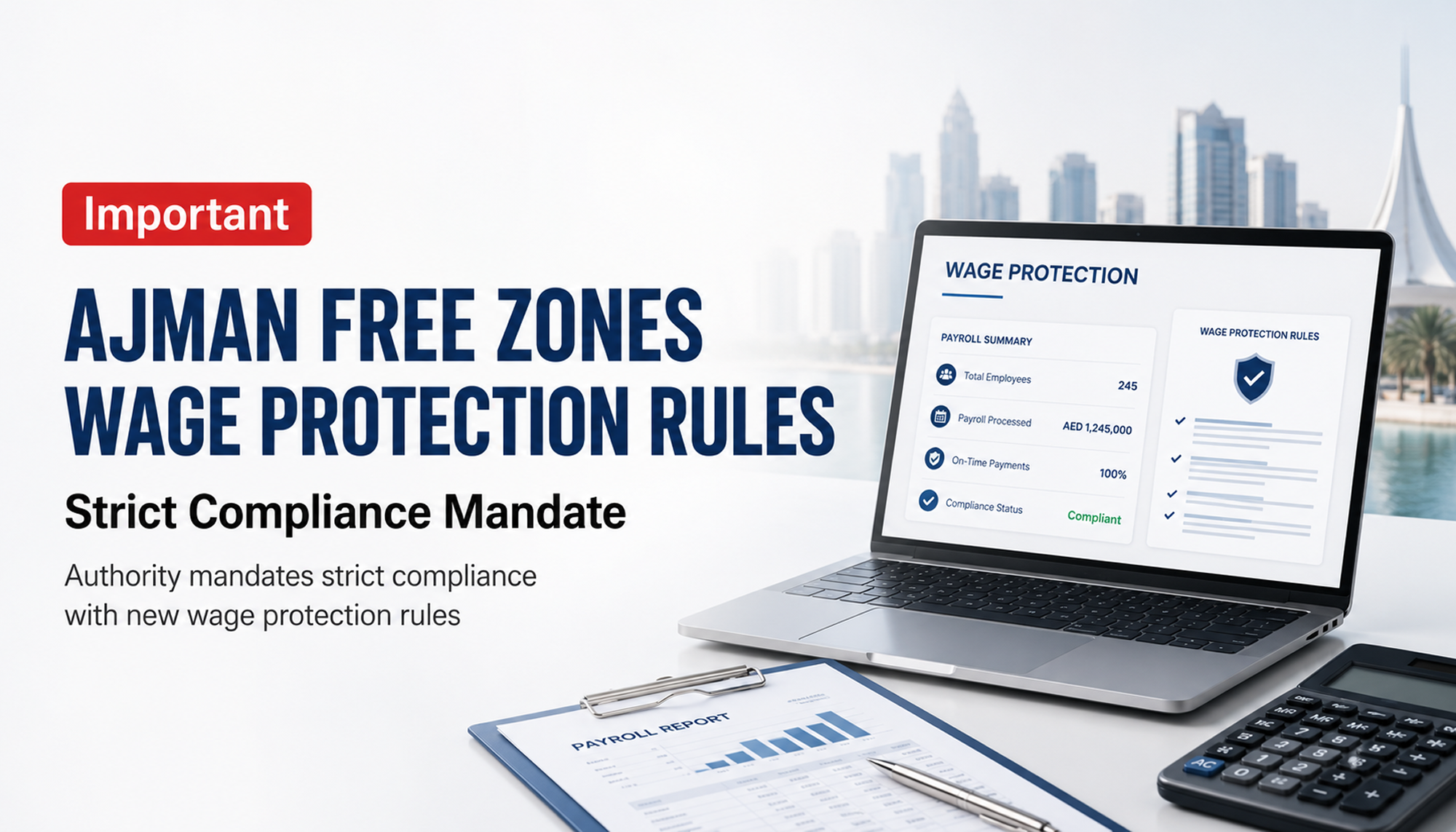
Ajman's Free Zones Authority has notified all business partners that, under UAE Ministerial Resolution No. 0340 of 2026, every establishment operating within the free zone must comply with approved wage payment requirements. Employees must be paid on their due dates, salaries for each Gregorian month must be settled by the first day of the following month, and companies must retain payroll records, salary transfer statements, and related banking or exchange house documents for inspection. Establishments must also submit payroll statements through the electronic portal within set deadlines. Non-compliance may result in fines, service suspensions, or other administrative penalties.
What the Notice Says
In a formal letter addressed to business partners, the FZA confirmed that the update aligns with UAE federal labour legislation governing employer-employee relations, including the framework established by the Wage Protection System. The letter, issued in both English and Arabic, outlines a clear set of obligations that companies operating in the Ajman free zone must now follow without exception.
Key Compliance Requirements
According to the announcement, establishments are required to:
Pay wages on time. Employee salaries must be disbursed according to legally approved payment mechanisms, with wages for any given Gregorian month due by the first day of the following month.
Maintain detailed payroll records. Companies must keep salary transfer statements and any supporting documentation submitted through banks, exchange houses, or other approved payment channels, and make these available on request to the Compliance and Inspection Team.
Submit payroll data through the electronic portal. Salary statements must be filed within approved deadlines whenever required or flagged by the Authority as part of its compliance and inspection process.
The FZA emphasized that these steps are designed to safeguard workers' rights while giving the Authority a clear audit trail to verify that companies are meeting their legal wage obligations.
Penalties for Non-Compliance
The notice is unambiguous about the consequences of falling short. Establishments that fail to meet the outlined requirements may face a range of enforcement actions, including formal violations, financial penalties, temporary suspension of government and free zone services, and other administrative measures. These actions will be applied in accordance with existing UAE laws, regulations, and systems enforced by the Free Zones Authority of Ajman, giving the Authority broad latitude to act on repeated or serious breaches.
Why This Matters for Businesses
For companies operating in Ajman's free zones — as well as those watching regulatory trends across the UAE's wider free zone and mainland ecosystem — the announcement is a reminder that wage compliance is no longer a background HR function but an active area of government oversight. With authorities tightening enforcement through resolutions like No. 340 of 2026, businesses are expected to treat payroll documentation, timely disbursement, and portal-based reporting as core operational responsibilities rather than administrative afterthoughts.
Companies unsure of how the new requirements apply to their operations, or those needing guidance on aligning existing payroll processes with the updated Wage Protection System, are encouraged to reach out directly to the Authority.
Contact Information
Businesses with questions about the new requirements about Freezone Business setup can contact Dahhan Business Services via:
Email: info@dahhanbiz.com
Phone: +971 50 1990 879
The FZA noted that its Compliance and Inspection Team remains available to support establishments through the transition and to clarify any aspects of the updated wage payment framework.



.png)
.svg)


.png)


.svg)