


What is DIFC?
DIFC stands for Dubai International Financial Centre, a special economic zone established in 2004 to support Dubai’s vision of becoming a leading financial services hub. It provides a platform for financial and professional services institutions to conduct business locally, regionally, and globally.
The financial free zone encompasses a physical area of over 110 hectares, housing more than 5,000 companies and employing over 36,000 professionals. It has its own civil and commercial laws, court system, and regulator, separate from the UAE’s broader legal and judicial frameworks.
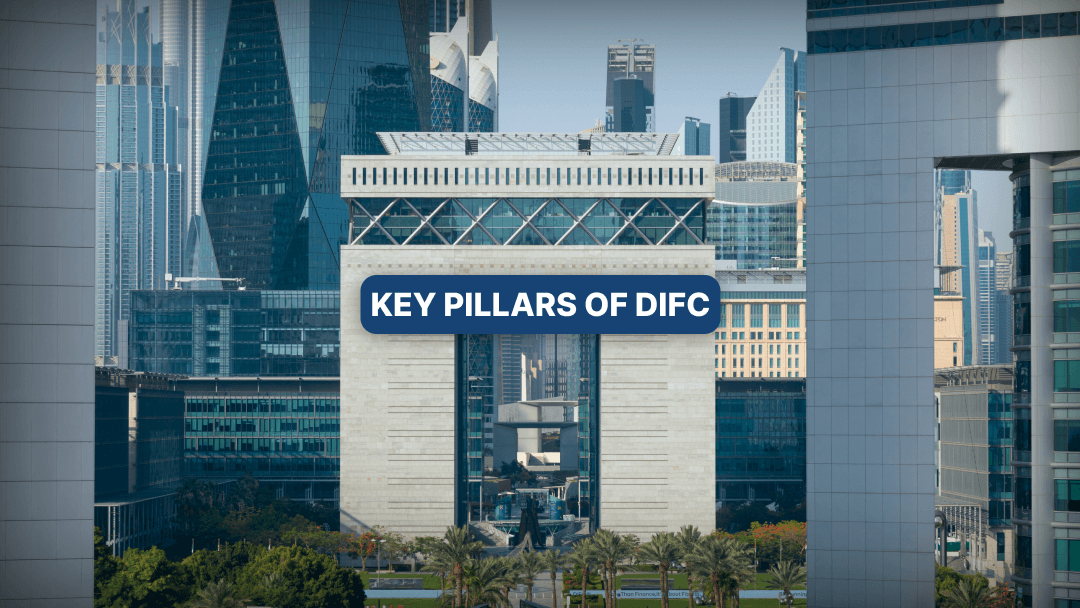
Key Pillars of DIFC
1. Independent Regulatory Framework
At the heart of DIFC is the Dubai Financial Services Authority (DFSA), an independent regulatory body responsible for supervising financial services conducted in or from DIFC. It ensures compliance with international standards while maintaining transparency and investor protection.
2. Legal System Based on English Common Law
Unlike the rest of the UAE, which primarily uses civil law, DIFC has adopted a legal framework based on English Common Law. This is administered by the DIFC Courts, offering a legal environment familiar to international investors and reducing risk.
3. Tax Incentives and Financial Benefits
- 0% income tax on profits for 50 years (renewable)
- 100% foreign ownership
- No restrictions on capital repatriation
- No currency controls
These benefits make DIFC a prime location for companies seeking financial efficiency and growth.
4. Strategic Location and Connectivity
Located between East and West, DIFC provides access to the Middle East, Africa, and South Asia (MEASA) region. Dubai’s infrastructure, airport connectivity, and global trade links make it an ideal hub for regional operations.
DIFC Ecosystem: Who Operates Here?
DIFC is home to a wide range of businesses, including:
- International and local banks
- Investment and private equity firms
- Insurance and reinsurance companies
- Fintech and innovation startups
- Legal and consulting firms
- Family offices
- Corporate service providers
It also supports non-financial businesses such as luxury retail, restaurants, art galleries, fitness centers, boutique hotels, and lifestyle services.
Types of DIFC Licenses
1. Financial Services License
Issued to entities conducting regulated financial activities such as banking, insurance, fund management, and investment services.
2. Non-Financial Business License
Ideal for law firms, consulting agencies, accounting firms, and support services.
3. Retail License
For cafes, restaurants, galleries, and lifestyle stores within DIFC.
4. Innovation License
Designed for tech and fintech startups with cost-effective access to DIFC’s ecosystem.
5. Family Office License
Allows high-net-worth individuals and families to manage private wealth and assets.
DIFC Courts and Legal Support
The DIFC Courts operate independently of UAE courts and handle civil and commercial disputes within DIFC. They also manage international arbitration cases.
The DIFC-LCIA Arbitration Centre provides dispute resolution services in collaboration with the London Court of International Arbitration (LCIA).
Compliance and Regulatory Process
Businesses operating in DIFC must comply with DFSA regulations, including:
- Due diligence and KYC procedures
- Ongoing compliance monitoring
- Annual audit and reporting
- AML/CFT requirements
These regulations are structured to balance compliance with ease of doing business.
DIFC Infrastructure and Lifestyle
DIFC offers a complete work-live-play environment with:
- Gate Building and Gate Avenue
- Cultural events and art nights
- Michelin-star restaurants and luxury hotels
- Coworking spaces and offices
This environment enhances productivity and attracts global professionals.
Business Setup Process in DIFC
Step 1: Determine Business Type and License
Identify the appropriate category (financial, non-financial, retail, or innovation).
Step 2: Submit Application
Includes company name reservation and initial documents.
Step 3: DFSA or ROC Review
DFSA reviews financial firms; ROC reviews non-financial entities.
Step 4: Lease Office Space
Physical office presence is required.
Step 5: Final Approval
License is issued after documentation verification.
Step 6: Visa and Bank Setup
Apply for visas and open a corporate bank account.
DIFC Business Setup Support
At Dahhan Business Services, we assist with:
- Business structuring and licensing
- Regulatory consulting
- Document preparation
- Office selection
- Visa services
- Bank account setup
- Ongoing compliance
Advantages of Partnering with Dahhan
- Experienced consultants
- Customized solutions
- End-to-end support
- Multilingual assistance
- Transparent pricing
Call Us
Are you ready to expand into a global financial hub?
Let Dahhan Business Services handle your DIFC company formation with speed and compliance.
Contact us today for a free consultation and customized setup plan.
Frequently Asked Questions
What is DIFC in Dubai?
A financial free zone supporting banking, finance, legal, and fintech businesses.
Is DIFC part of mainland Dubai?
No, it operates as a separate legal and jurisdictional entity.
Can I own 100% of my company?
Yes, DIFC allows full foreign ownership.
What taxes apply?
0% income tax for 50 years, with 5% VAT on applicable transactions.
How long does setup take?
Typically 2 to 4 weeks.
Is office space required?
Yes, a physical office is mandatory.
How is DIFC different from other free zones?
It has its own legal system, courts, and focuses on financial services.
Final Thoughts
Setting up in DIFC is a strategic move for businesses seeking global expansion. With its strong legal framework, financial benefits, and international credibility, it offers an ideal environment for growth.
Start your DIFC journey with Dahhan Business Services—your trusted business setup partner in Dubai.



.png)
.png)
.svg)


.png)


.svg)